
.jpg)



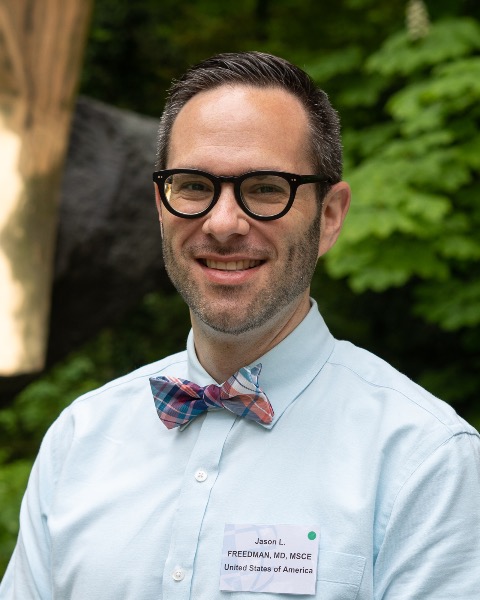
Attending Physician, Inpatient Medical Director
Children's Hospital of Philadelphia
University of Pennsylvania, Perelman School of Medicine
Jason L. Freedman, MD, MSCE is a Pediatric Oncologist who graduated with honors from Cornell University and received his medical degree Magna Cum Laude from Upstate Medical University in Syracuse, New York. Dr. Freedman completed his residency in Pediatrics at the Children’s Hospital of NY-Presbyterian (Columbia) and was Pediatric Chief Resident thereafter. He completed fellowship training in Pediatric Hematology/Oncology at the Children’s Hospital of Philadelphia, where he earned a Masters of Science in Clinical Epidemiology from the University of Pennsylvania. Dr. Freedman has received numerous awards and honors including AOA, nominations into the President’s Circle of Excellence and Attending of the Year at the Children’s Hospital of NY-Presbyterian. During fellowship at CHOP, he was the recipient of the William Potash Fellow Teacher of the Year for his commitment to resident education and clinical excellence. As an Associate Professor of Clinical Pediatrics at PENN/CHOP, he has earned a Distinguished Teaching Award and was selected for the early career faculty honor roll several years in a row. Dr. Freedman serves as the Inpatient Medical Director of Oncology/Stem Cell Transplant at CHOP. His clinical focus is blood and marrow transplantation. He has a particular interest in pediatric supportive oncology and understanding symptoms, infections, malnutrition and organ toxicities in pediatric cancer and hematopoietic stem cell transplant (HSCT) patients. Dr. Freedman serves on committees within the Children’s Oncology Group and is the Chair of the Pediatric Study Group within MASCC. He is also the PI/Co-PI of collaborative trials focused on supportive care/organ toxicity in HSCT. Dr. Freedman has authored textbook chapters and peer-reviewed articles on the supportive care of children with cancer and has contributed to the development of clinical guidelines to standardize management of symptoms and toxicities. Dr. Freedman is also a leader in clinical quality/process improvement, and optimization of clinical operations.