Consultant Mayo Clinic Rochester, Minnesota, United States
Abstract:
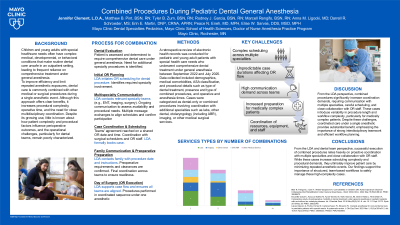
Purpose: Children with special health care needs frequently required comprehensive dental treatment under general anesthesia due to medical complexity, behavioral limitations, and treatment burden. Hospital-based care often allowed coordination of dental treatment with other medically necessary procedures during a single anesthetic exposure. This study evaluated the prevalence and types of combination procedures performed with pediatric dental care under general anesthesia and examined their association with dental operative time at a tertiary care hospital.
Methods: A retrospective review of electronic health records was conducted for pediatric patients treated under general anesthesia between September 2022 and July 2025. Data abstracted included demographic characteristics, medical conditions, American Society of Anesthesiologists status, dental procedures performed, presence and type of combination services under general anesthesia, throat pack in and out times, and anesthesia-related adverse events.
Results: A total of 438 cases were analyzed. Combination procedures were performed in 166 cases (38%). Commonly coordinated services included otolaryngology, medical imaging, and other surgical specialties. Dental operative time varied across cases and was greater in patients undergoing combination procedures compared with dental-only cases. Additional analyses stratifying operative time by procedure type and patient complexity are ongoing.
Conclusions: Combination procedures were frequently incorporated into pediatric dental care under general anesthesia for patients with special health care needs. These findings underscored the importance of coordinated care planning and operative time considerations when managing complex pediatric dental patients in hospital settings, especially to limit anesthesic exposures.

.jpg)