
.jpg)



Syndromes/Craniofacial Anomalies

EUNSU SONG, DDS
Resident
Other
Asan Medical Center, Seoul, South Korea
SEOUL, Seoul-t'ukpyolsi, Republic of Korea
SOYEON BAK, DDS
Other
SEOUL, Seoul-t'ukpyolsi, Republic of Korea
Hyeon-Heon LEE, DDS
Other
SEOUL, Seoul-t'ukpyolsi, Republic of Korea
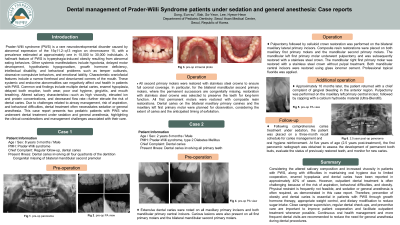
Prader–Willi syndrome (PWS) is a rare neurodevelopmental disorder characterized by hypotonia, hyperphagia, obesity, and behavioral dysregulation, all of which complicate routine dental care. Oral findings frequently include enamel hypoplasia, delayed eruption, and a high prevalence of early childhood caries. Salivary abnormalities—such as reduced secretion rate, increased viscosity, and altered composition—further heighten caries susceptibility and contribute to difficulties in maintaining oral hygiene. Two pediatric patients with PWS presented with extensive early-onset caries and limited cooperation, necessitating dental management under sedation or general anesthesia. Medical comorbidities, including hypotonia, obesity-related airway concerns, and endocrine conditions, emphasized the importance of thorough preoperative evaluation and interdisciplinary coordination. These cases illustrate that children with PWS require early preventive care, regular monitoring, and individualized behavior and anesthesia planning to achieve safe and effective dental outcomes.